Showing posts with label musical. Show all posts
Monday, April 10, 2017
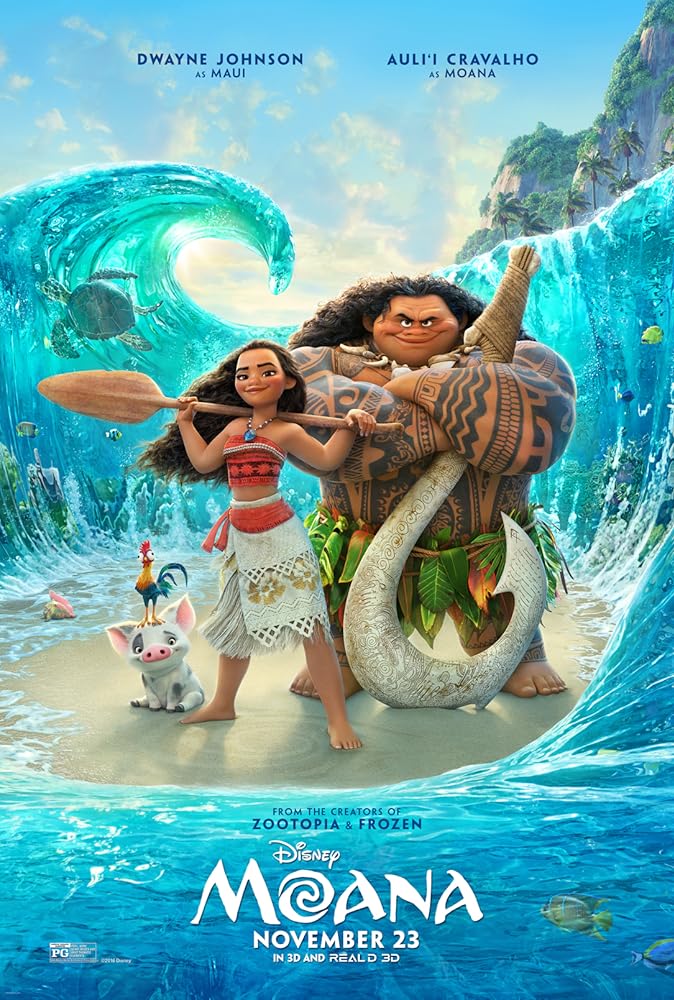
Moana (2016)
Disney takes a trip to the South Pacific in their latest animated feature, Moana. The film tells the story of a young woman named Moana (voiced by newcomer Auli'i Cravalho), who serves as chieftain of her small island. When problems begin appearing in the local plant life, Moana sets off on a dangerous journey to find the exiled demigod Maui (voiced by Dwayne Johnson), who holds the power to restore the island to its natural state. After a rocky introduction, the two eventually join forces, and return home to set things right.
Moana is delightful visually, filled with vibrant colours and interesting character designs. The animators make great use of the iconic images of Hawaii, and have outdone themselves with the level of detail presented. Everything you see on screen, from flowers to rope fibres, to the ocean spray itself, feels authentic and draws you further in to Moana's world.
Moana is not only visually pleasing, but it's a treat for the ears as well. This is in part due to the contribution of Broadway darling Lin-Manuel Miranda, writer of the Oscar nominated song 'How Far I'll Go'. The songs are very well written and composed, and are as memorable as any Disney film that came before it. Thankfully, Miranda has a great support for his music with the voice talents of young Auli'i Cravalho. Even Dwayne Johnson gets his own moment in the spotlight, and it turns out he's a decent singer as well!
The story of Moana, based in Hawaiian legend, reminded me somewhat of Disney's Hercules. Considering directors John Musker and Ron Clements worked on Hercules back in the 90s, this doesn't come as too big a surprise. It's clearly the kind of story they love to tell, with lots of action, a few laughs, and a big heart. While some may say it's not as complex as a movie like Zootopia, I think Moana still has a lot of value. Moana is a great movie for kids and adults alike. It has great music and visuals, a wonderfully strong female lead, (with not a prince in sight) and it has some important lessons to teach us about courage and reconciliation.
Friday, February 24, 2017
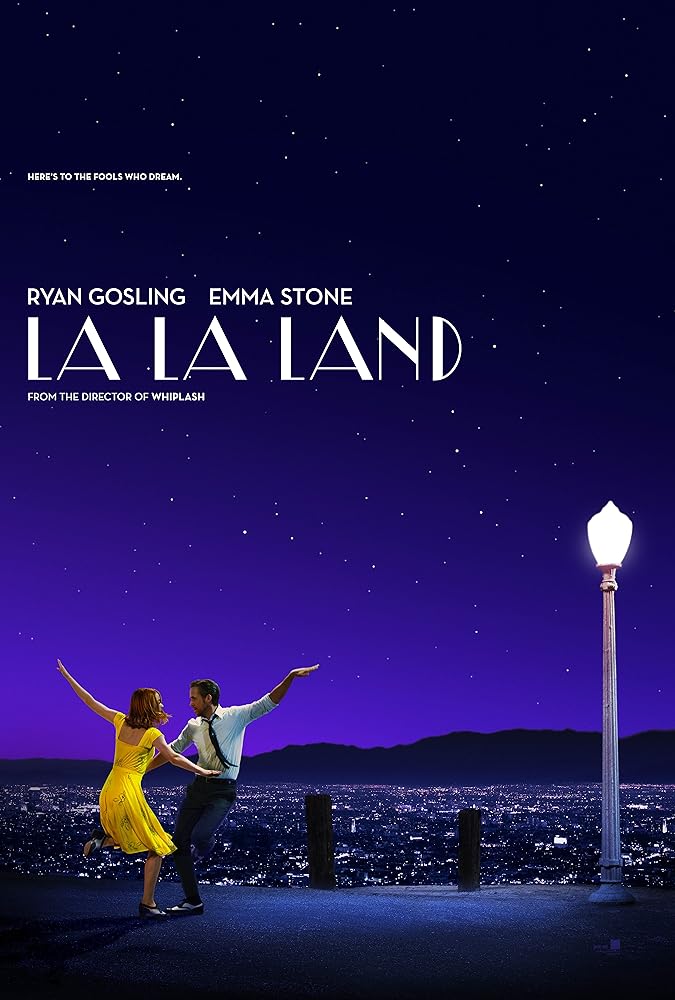
La La Land (2016)
La La Land is one of the most talked about films to come out this year, with multiple Oscar nominations (as of this writing), as well as multiple Golden Globe wins. The film begins its story with Mia (Emma Stone), an aspiring actress who is currently making ends meet by working at a Hollywood coffee shop. Sebastian (Ryan Gosling) is in a similar life situation, forced to play uninspiring music for an unappreciative audience, instead of opening the jazz club he dreams of owning one day. After a few chance meetings, the two fall in love, and begin to seek their dreams together. However, both run into obstacles, and realize that the way to their dreams wasn't at all what they imagined.
La La Land is a wonderfully made film. The cinematography, lighting and choreography are all excellent and deserving of all the awards attention this film has received. The songs are memorable, and will stick in your head in the best way. The acting is equally praiseworthy. Not only do Ryan Gosling and Emma Stone have great onscreen chemistry and captivating performances, but they also sing, dance, and even play piano, in Gosling's case. Of course, if you've read even the smallest media coverage of this movie, you already know all of this. The real magic of La La Land is how it makes you feel when the credits are over.
I saw La La Land in a small town theater (thanks to the folks at the Norgan Theatre!). To the best of my memory, I haven't seen a movie in this type of theatre since the late 90s. Being able to briefly soak in those feelings of nostalgia certainly enhanced the experience for me, so I encourage you to see it somewhere small and local, if you can. As I mentioned before, La La Land is much more than a simple song and dance movie. The ending will feel different for everyone who sees it, but I'm confident it will make you think about your own life and the choices you've made in that time. La La Land also explores the idea of personal dreams and relationships. Sometimes dreams are not what they seem, or the process of achieving them is much different than we imagine. In the same way, people can become different over time, in their ideals and personalities. It's a surprising amount of emotional data to unpack, but it's well worth the price of admission.
In short, La La Land brings back the classical flair of old Hollywood, while at the same time challenging the emotional intellect of the audience. It doesn't claim to have any answers to the questions it raises, but it dares to ask those questions all the same. I think La La Land is a film with class and complexity that will stand the test of time for future generations.
Monday, January 9, 2017
The First Three - Galavant (2015)
For an introduction to my First Three series, click the link!
ABC's Galavant is a musical comedy that follows the adventures of Galavant (Joshua Sasse), a washed up knight whose present exploits include heavy drinking and being kicked out of inns when he can't pay the tab. This changes when he meets Princess Isabella (Karen David), and tagalong squire Sid (Luke Youngblood), who reignite his better nature as they begin a quest to liberate Madalena (Mallory Jansen), Galavant's lady love, from the clutches of the evil King Richard (Timothy Omundson). What Galavant doesn't know is that Isabella is actually working for King Richard, and the quest is an elaborate double cross.
The first thing you will notice about Galavant is the music. Every episode contains at least a few songs, and this is where the show works best. I initially dismissed the music as a bit too simple, but I guarantee the theme music will stick in your head even if you just watch the pilot. As well, there are some very clever lyrics used in the songs, which give a good sense of the show's general style.
On the acting side of things, Joshua Sasse plays the arrogant, overconfident Galavant quite well. He's not exactly likable, but the enthusiasm of his companions helps to make him look good. I found the foppish King Richard to be the standout performance of the show. His cruel, yet childishly sensitive character is consistently funny, especially when it comes to musical numbers. One particular number involves him detailing how he'd execute his rivals in song, and is a perfect example of the style Galavant aims for.
Galavant's sense of humour ranges wildly, from Monty Python style silliness, to the self-aware modernism of the Shrek films. As such, it's very difficult to pin down exactly who the target audience of this show is. There are some dashes of adult humour, so it's not exactly for kids, but other than that, it reads as a family friendly comedy. It feels as if the writers took an 'anything goes' approach, which is a bit problematic, as many of the jokes are hit and miss affairs. In particular, I'm reminded of a joke from episode 2: the king's henchman Gareth (Vinnie Jones) makes an off-colour comment involving his unusual taste in women. At first, I found it funny enough to laugh at, but then the writers draw the joke out a few beats too long. At this point, the joke fails and becomes uncomfortable, or even offensive to some. This lack of consistency is my main issue with Galavant. Perhaps these issues are resolved in future episodes, but as it stands, I can't recommend Galavant on the basis of its comedic style. If you're looking for a medieval musical comedy, this will certainly fit the bill. For me personally, it's not nearly as smart or funny as it wants to be.
Wednesday, September 14, 2016
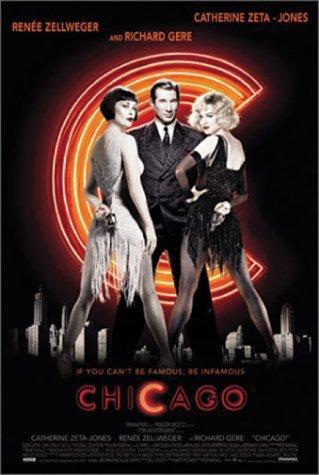
Chicago (2002)
"In this town, murder's a form of entertainment," says Matron 'Mama' Morton (Queen Latifah) early on in Chicago. This is a very precise description of the story told in this film.
Set in 1920s Chicago, we are told the story of Roxie Hart (Renee Zelwegger), an aspiring vaudeville actress who accidentally kills a man who promised her fame and fortune. She's sent to prison where she meets Velma Kelly (Catherine Zeta-Jones). Her story is similar, except she's a legitimate vaudeville star, and did the deed on purpose. Realizing the she's on death row and time is short, Roxie enlists the help of lawyer Billy Flynn (Richard Gere), who will represent anyone for the right price. As it turns out, Flynn is also defending Velma in court at the same time. What follows is a dramatic, and often dishonest, battle for fame in the Chicago courtrooms told in the tradition of vaudeville song and dance.
Along with other films like Moulin Rouge, Chicago is responsible for reigniting an interest in musical films. It also did remarkably well at the 2003 Academy Awards, winning best picture over more serious films like Gangs of New York.
Chicago has an interesting premise, in that the internal dialogue of the characters is told in song and dance. Vaudeville is central to the plot, and the film uses all the facets of the prohibition-era entertainment to great effect. Over the course of the film, we see everything from tap-dancing to comedy to ventriloquism. There's seldom a moment without an accompanying song.
As well as the music, the film borrows some techniques from vaudeville as well. In place of more high-tech methods, the film makes use of traditional theatrical effects like mirrors, well-placed lighting, and even the use of scarves to simulate blood in one number. It all works very well together to give the audience the feeling that they're front-row center at a Broadway production.
The cast are all accomplished in acting as well as song and dance. Some of the choreography Zelwegger and Zeta-Jones perform on top of the acting itself is very impressive. This film is also enhanced by a top-notch supporting cast. I particularly liked John C. Reilly as Roxie's husband Amos, a pathetically sad man who has no understanding of what's really happening with Roxie.
As well put together as the film is, I personally found a felt a little let down in the plot department. There are several potentially interesting plot threads that were left completely unexplored in favour of more musical numbers. In addition, I felt the ending of the film was essentially the lead-in to an elaborate closing song and dance number. I was left wanting some more definitive answers about what happened next, but was left to imagine an ending while the credits rolled.
Despite its few shortcomings, I do think Chicago is a good film. What it lacks in substance, it makes up for in spectacle. While the musical style may not be for everyone, it has something for just about everyone else. It's fun and exciting, and captures all the elements of the prohibition era.
Subscribe to:
Posts (Atom)